A section underperforms.
Yield is off. A greenhouse row looks wrong. Something that was working isn't.
Sator forces a clear understanding of what happened, guides the response, and records what was actually done.
No dashboards. No noise. Just execution.
It isn't for when everything is working. It's for the moment teams stop trusting the system and start guessing — and every second of that guessing is loss.
Yield is off. A greenhouse row looks wrong. Something that was working isn't.
Sensors say different things. The dashboards don't match what the team is seeing on the ground.
No clean alarm, no clean cause. Just the moment teams stop trusting the system and start guessing.
Confusion → controlled response. Every step captured. Nothing lost.
Most tools try to show you more. Sator structures what you do next — and makes sure it's correct.
Sensor readings, operator inputs, and field observations flow into a single structured view of the situation — not five tabs, not four group chats.
When signals disagree, Sator flags the contradiction instead of averaging it away. Teams see the disagreement and can act on it.
Sator turns a messy alert into a guided sequence — what to verify next, who needs to act, when to escalate. Response is coordinated instead of improvised.
Every step, check, and decision is captured automatically. What was known, what was uncertain, and what action was taken — ready for review.
Sator connects what's happening in the field to a defensible operational response. Starting with mobile units, expanding into a site-wide monitoring system.

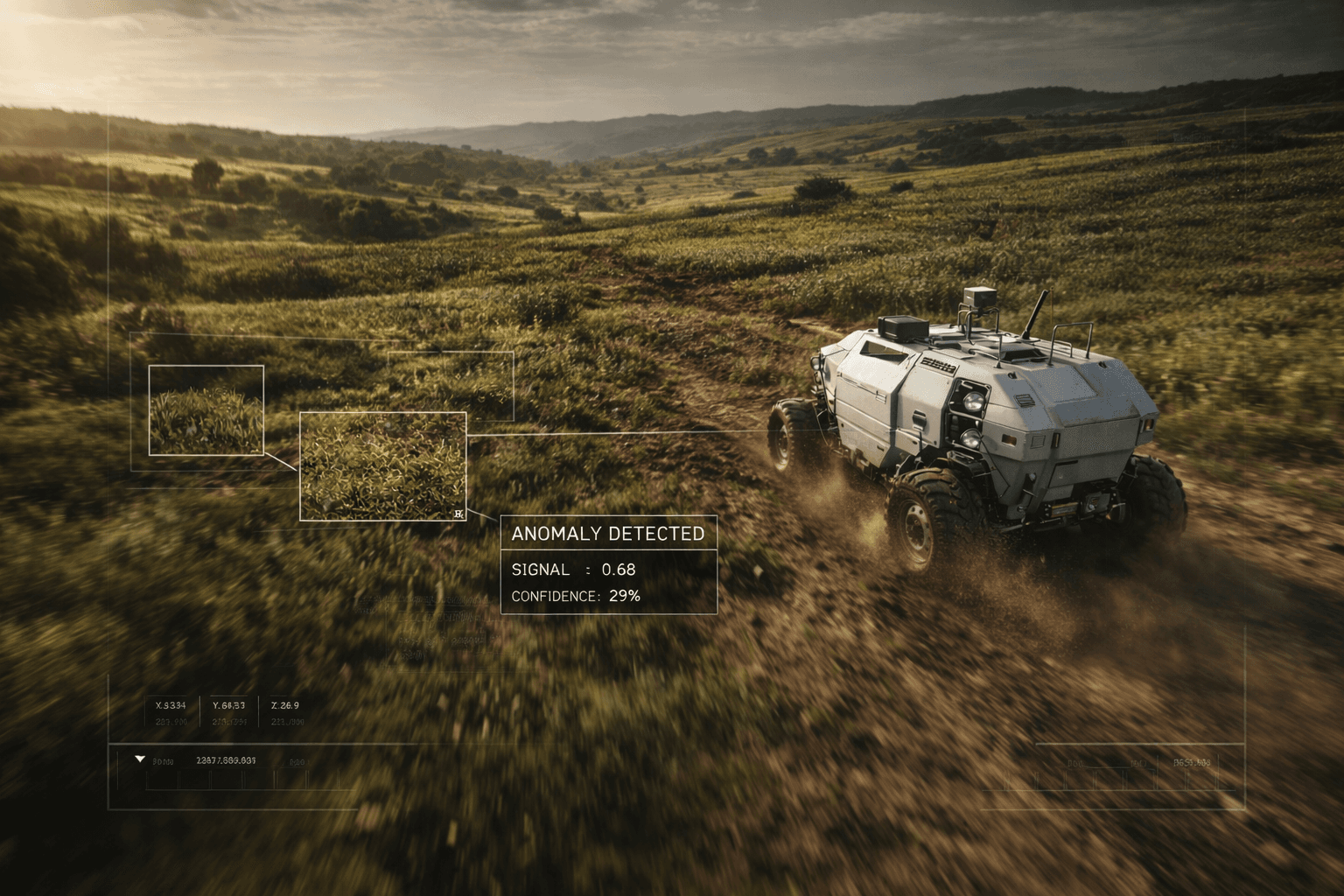
A rugged unit moves across the site, sensing what's actually happening — not what a dashboard assumes.
Mobile units plug into a broader mesh of fixed sensors, extending visibility across zones and shifts.
Incoming signals are turned into a clear next step, a coordinated response, and a record of what was done.
A small team focused on one thing: the moment something goes wrong in a real physical system, and what happens next.

Builds Sator's core decision infrastructure end to end, from signal ingestion to structured response.

Ryan works at the intersection of machine learning, distributed systems, blockchain research, and operational design, focused on one problem: how to turn messy, conflicting real-world signals into clear, defensible action. His approach avoids dashboards entirely — prioritizing decision clarity under pressure.
He has conducted AI, systems, and blockchain-related research with the Air Force Research Laboratory (AFRL), a U.S. national lab, and worked within QUAY Acceleration, a startup accelerator, where he built automation and decision-support systems for real organizations.
At Sator, he leads system architecture, product direction, and the design of the decision layer that governs how teams respond when systems fail.

Leads Sator's mobile systems layer — where hardware, environment, and operator response meet.
Naomi has experience in mechanical engineering environments through prior work at Boyce Technologies and has also conducted mechanical engineering research. Her strength is in understanding how systems behave physically — movement, constraints, and failure points — and translating that into deployable systems.
At Sator, she is directly involved in the design, behavior, and deployment of the rover and mobile nodes, ensuring they function reliably in real conditions. She also works on field workflows, making sure what the system outputs aligns with how teams actually operate.
She sits at the intersection of mechanical design, field reality, and execution — not just operations, but how the system physically shows up and performs.

Leads Sator's robotics and sensing intelligence layer.
Chloe's background spans robotics, embedded systems, and AI. She has contributed to rover-based systems through NASA-affiliated programs and has worked as an AI engineering intern at Amazon, gaining experience with production-scale machine learning systems.
At Sator, she is responsible for rover robotics, computer vision, and sensing logic — how the system perceives the environment, processes it, and produces reliable signals.
Her work ensures that what Sator sees is not just data, but interpretable, trustworthy input that can drive decisions.

Builds the engineering and edge layer that connects hardware to Sator's system.
Khurram is a software engineering student at Florida Institute of Technology, with strong experience across embedded systems, IoT pipelines, and engineering competitions. He has led and contributed to multiple technical builds where performance, speed, and system reliability were critical.
At Sator, he develops the sensor integration, communication pipelines, and edge infrastructure that allow data to move cleanly from physical systems into the decision layer.
His role ensures the system is not just intelligent, but technically sound, fast, and deployable.

Anchors Sator in real agricultural systems, operators, and deployment environments.
Jamora is a student at Cornell University's College of Agriculture and Life Sciences (CALS), with a background spanning agricultural science, national STEM initiatives, and field-based research. She has served as a Co-Principal Investigator on an NSF-backed research initiative and works closely with agricultural communities and organizations.
Her experience bridges research and real-world application — understanding both how systems should work and how they are actually used in practice.
At Sator, she leads agricultural alignment, pilot partnerships, and domain strategy, ensuring the system reflects real needs in controlled and open-environment agriculture.
Sator exists for the moment things go wrong. If you're running a farm, a greenhouse, or a physical site where failure has cost — request access.